People
Directors
-

N. Ángel Pinillos
Founding Director, Professor and Head of Philosophy
School of Historical, Philosophical and Religious Studies
Arizona State University- PhD Philosophy, Rutgers University
- BS Mathematics, Tufts University
Ángel Pinillos is a philosopher whose research spans experimental philosophy, epistemology, philosophy of language, and cognitive science. He is the author of Why We Doubt: A Cognitive Account of Our Skeptical Inclinations (Oxford University Press, 2023) and is writing a second book, Doubt in an Uncertain World: A Philosophical Theory , also under contract with Oxford. With Joshua Knobe (Yale) and Shaun Nichols (Cornell), he co-edits the Oxford Studies in Experimental Philosophy book series. His work has been supported by the National Endowment for the Humanities, the Templeton Foundation, and the Cosmos Institute's Artificial Intelligence for Truth grant, among others. He has published in leading journals and in public venues including the New York Times and the Chronicle of Higher Education , and he founded and built publicscholarship.org, an AI-powered discovery engine that is the largest database of public-facing scholarship in the world. He is currently spearheading new BA and BS majors in Artificial Intelligence and Ethics at ASU, proposed to begin in fall 2027. Pinillos was born in Peru and immigrated to the United States at age ten.
-

Hasan Davulcu
Associate Director
Professor of Computer Science
School of Computing and Augmented Intelligence
Arizona State University- PhD Computer Science, SUNY Stony Brook
- BS Mathematics, Middle East Technical University, Turkey
Dr. Hasan Davulcu is a Professor in the School of Computing and Augmented Intelligence at Arizona State University and the inventor of the lifting–lowering framework for Interpretable AI. His patented AI and machine learning algorithms mine information from multilingual text, image, and video sources across social networks, transforming opaque neural outputs into symbolic, auditable reasoning structures. His work advances AI systems that are transparent, programmable, value-aligned, and verifiable—systems that not only say what they do, but do what they say. Dr. Davulcu’s research in data mining, machine learning, social intelligence, and neuro-symbolic AI has been published in leading ACM and IEEE conferences and journals. His sociocultural modeling work in the U.S. Department of Defense Minerva Research Initiative–funded “Finding Allies for the War of Words” project was recognized with a 2011 HSCB Focus Exceptional Scientific Achievement Award by the Office of the Assistant Secretary of Defense for Research and Engineering. He has served as Principal Investigator on major NSF and DoD research initiatives, including an NSF Partnership for Innovation grant on behavioral analytics for detecting financial fraud and a DoD Minerva Research Initiative project on measuring and countering social influence and persuasion by extremist groups. His current work focuses on Programmable and Explainable Neuro-Symbolic AI, proof-carrying reasoning, and human-governed AI systems whose logic can be inspected, corrected, and trusted. He is co-founder of ARTIS MAGI and founder and CTO of GoPX.AI—an interpretable AI platform that says what it does, and does what it says. .
Founding Members
-
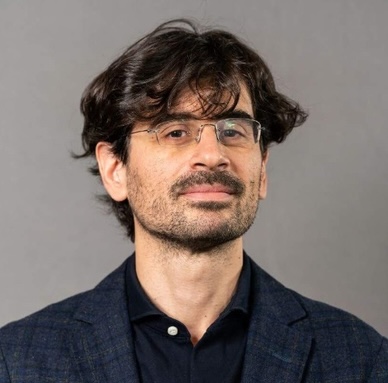
Marcello Di Bello
Associate Professor of Philosophy
School of Historical, Philosophical and Religious Studies
Arizona State University- PhD Philosophy, Stanford University
- M.Sc. Logic, University of Amsterdam
- BA Philosophy, Catholic University of Milan
Di Bello is interested in topics at the intersection of philosophy of law and epistemology, such as statistics in the law, risk and decision-making, algorithmic fairness, evidence and probability. His research examines how reliance on quantitative methods pose challenges and opportunities to the criminal justice system. He was a fellow in the School of Social Science at the Institute for Advanced Study in Princeton. .
-

Stella Fillmore-Patrick
Assistant Professor of Philosophy
School of Historical, Philosophical and Religious Studies
Arizona State University- PhD Philosophy, The University of Texas at Austin
- MS Statistics, The University of Texas at Austin
- MA Philosophy, Central European University, Austria
- BA St. John's College, Maryland
Stella Fillmore-Patrick works in the philosophy of probability, the philosophy of statistics, and formal epistemology. Current projects include work on the epistemic foundations of frequentist hypothesis testing, the use of statistical models for measurement in the social sciences, and opacity in models in machine learning..
-

Hunter Priniski
Postdoctoral Researcher in Computational Psychology
UCLA Reasoning Lab- PhD Computational Cognition, UCLA
- BS Mathematics, Arizona State University
Hunter Priniski is a postdoctoral fellow at UCLA, where he received a PhD in Computational Cognition from the Department of Psychology in 2024. His current research focuses on how multi-agent human-AI systems can reach creative forms of consensus, and addresses current gaps in how human-AI alignment frameworks scale to multi-agent systems. This research extends his decade-long interest in how emerging technologies, including online networks, interactive media, and AI, impact people’s narrative agency: a person’s ability to learn, communicate, and shape the narratives centering their lives and communities. His research has been published in 20+ high impact journals and academic conferences, and has been presented to research labs, AI industry leaders, and startups spanning the United States and Europe. Trained as an experimental psychologist with deep commitments to open-source software development and creative placemaking, Dr. Priniski actively applies research findings from the laboratory to real-world contexts, from fostering resilience through artistic narrative collaborations in rural communities, to conducting live experiments on large ticketed audiences in urban centers. He will continue helping more people equip themselves with the knowledge and skills to thrive in an increasingly complex and dynamic world.
-

Nat Hansen
Associate Professor of Philosophy
University of Reading- PhD Philosophy, University of Chicago
- MA PPE, University of Oxford
- A.B. Philosophy, Georgetown University
Nat Hansen is Associate Professor of Philosophy at the University of Reading. He works on topics in philosophy of language, experimental semantics and pragmatics, the history of ordinary language philosophy, and meaning holism in distributional semantics and LLMs. He is the creator of ux-phi.com, a platform that uses AI to run interactive, narrative-driven historical philosophy simulations and dynamic thought experiments (“Socratic Questionnaires”). With Ángel Pinillos he was awarded a Cosmos Institute AI x Truth-Seeking grant for a project on synthetic research networks, which uses populations of AI agents to study how communities of inquirers search for truth. He has held research fellowships from the Alexander von Humboldt Foundation and the Stanford Humanities Center.